How Do Digital Picture Frames Work? A Simple Explanation
A plain-English guide to how digital picture frames work, from WiFi to slideshows to storage.
A digital picture frame is a small screen that shows your photos on a loop. Think of it as a regular picture frame that changes photos by itself. Some connect to WiFi. Others use a USB drive or memory card. Either way, you load your photos and the frame does the rest.
Here is a simple breakdown of how every part works.
Two Types of Digital Frames
There are two main types: WiFi frames and non-WiFi frames. They work differently, so it helps to understand both.
WiFi frames connect to your home internet. You send photos from your phone using an app, email, or a cloud service like Google Photos. The frame downloads each photo over WiFi and adds it to the slideshow. Brands like Aura, Nixplay, and Skylight all use WiFi.
Non-WiFi frames do not use the internet at all. You load photos from a USB flash drive or SD memory card. Plug the drive into the frame and it reads the photos directly. The Dragon Touch Classic 10 and Aluratek 10 both support this.
How Photos Get on the Frame
There are several ways to load photos depending on the frame you buy.
- Mobile app: Most WiFi frames have a free app. Open the app, pick photos from your camera roll, and tap send. The photos show up on the frame in a few minutes.
- Email: Skylight and Pix-Star frames each have their own email address. Attach a photo to an email and send it. The frame picks it up automatically. Great for people who do not want to use an app.
- Cloud sync: Some frames connect to Google Photos, iCloud, Dropbox, or Facebook. Pick an album and the frame pulls new photos on its own. You never have to send anything manually.
- USB or SD card: Copy photos from your computer to a flash drive or memory card. Plug it into the frame. The frame reads the files and starts the slideshow.
For a full walkthrough of each method, see our guide on how to send photos to a digital frame.
How the Slideshow Works
Once photos are loaded, the frame runs a slideshow. It cycles through your photos one at a time. Most frames let you control how fast photos change. Common options are every 10 seconds, 30 seconds, one minute, or one hour.
Some frames show photos in the order you added them. Others shuffle them randomly. Many let you choose between the two. A few smart frames, like the Aura, use software to pick photos you have not seen in a while so the slideshow stays fresh.
Transition effects between photos vary. Some frames fade from one photo to the next. Others slide or wipe. On most frames you can turn transitions off if you prefer a clean swap.
The Screen
Most digital frames use LCD screens, the same type of screen in laptops and TVs. Screen quality depends on two things: size and resolution. A 10-inch frame with 1280 by 800 pixels looks good. A 15-inch frame needs at least 1920 by 1080 pixels to look sharp.
For a deeper look at screen specs, read our resolution guide.
Some frames also have an IPS panel, which gives wider viewing angles. That means the photo looks good from the side, not just straight on. Most frames priced above $100 use IPS.
Power
Digital frames plug into a wall outlet. They use very little power. A typical 10-inch frame uses about 5 to 8 watts, less than a night light. Most frames have a motion sensor or a schedule feature that turns the screen off when no one is around. This saves energy and extends the life of the screen.
A few newer frames have a built-in battery for portable use. These run for a few hours without being plugged in. See our roundup of battery-powered frames for details.
Storage: Cloud vs Local
WiFi frames usually store photos in the cloud, meaning on the company's servers. Aura gives you unlimited free cloud storage. Nixplay gives you 500 MB free and charges for more. Cloud storage means your photos are backed up even if the frame breaks.
Non-WiFi frames store photos locally, either on the USB drive, SD card, or built-in memory. Local storage means no monthly fees, but also no backup. If the frame or drive is damaged, those photos are gone.
For a comparison of frames with free storage, see our list of frames with free cloud storage.
Do You Need WiFi?
WiFi is what turns a basic frame into a smart frame. With WiFi, family members can send photos from across the country. Without WiFi, you load photos manually. Both types work well. It just depends on how you plan to use the frame.
Still not sure? Read our article on whether digital frames need WiFi.
The Bottom Line
A digital picture frame is a screen that shows your photos on repeat. WiFi frames let you send photos from anywhere. Non-WiFi frames use a USB or SD card. Both types run slideshows, use very little power, and sit on a desk or hang on a wall. Once you load your photos, the frame does all the work.
Frames we recommend for this
Current models only. Prices are shown on Amazon, not here.
 Aura Carver
10.1" · 1280x800 · Unlimited storage
The Aura Carver is a great pick if you want a widescreen frame with a calibrated screen and zero storage fees.
Check Price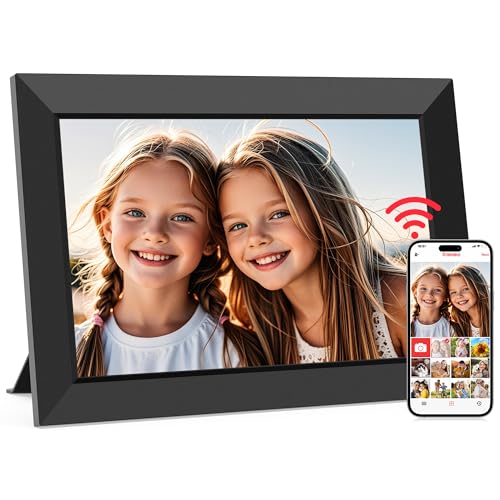 Frameo 10.1"
10.1" · 1280x800 · 32 GB built-in storage storage
The best digital frame under $100. If budget is your top concern, start here.
Check PricePaid links. We earn a commission if you buy, at no cost to you.
DigitalPictureFrames.com
Written by the editorial team at Anvil Road LLC. We research digital frames against manufacturer documentation so you get honest, sourced advice.